Published on September 17, 2026
Can a Kiwi Really Grow in Quebec ?
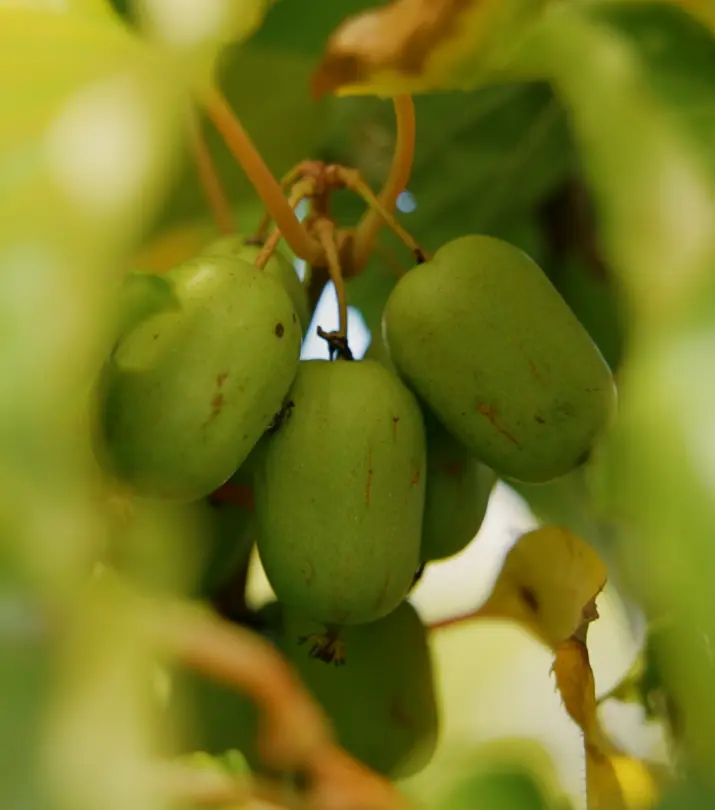
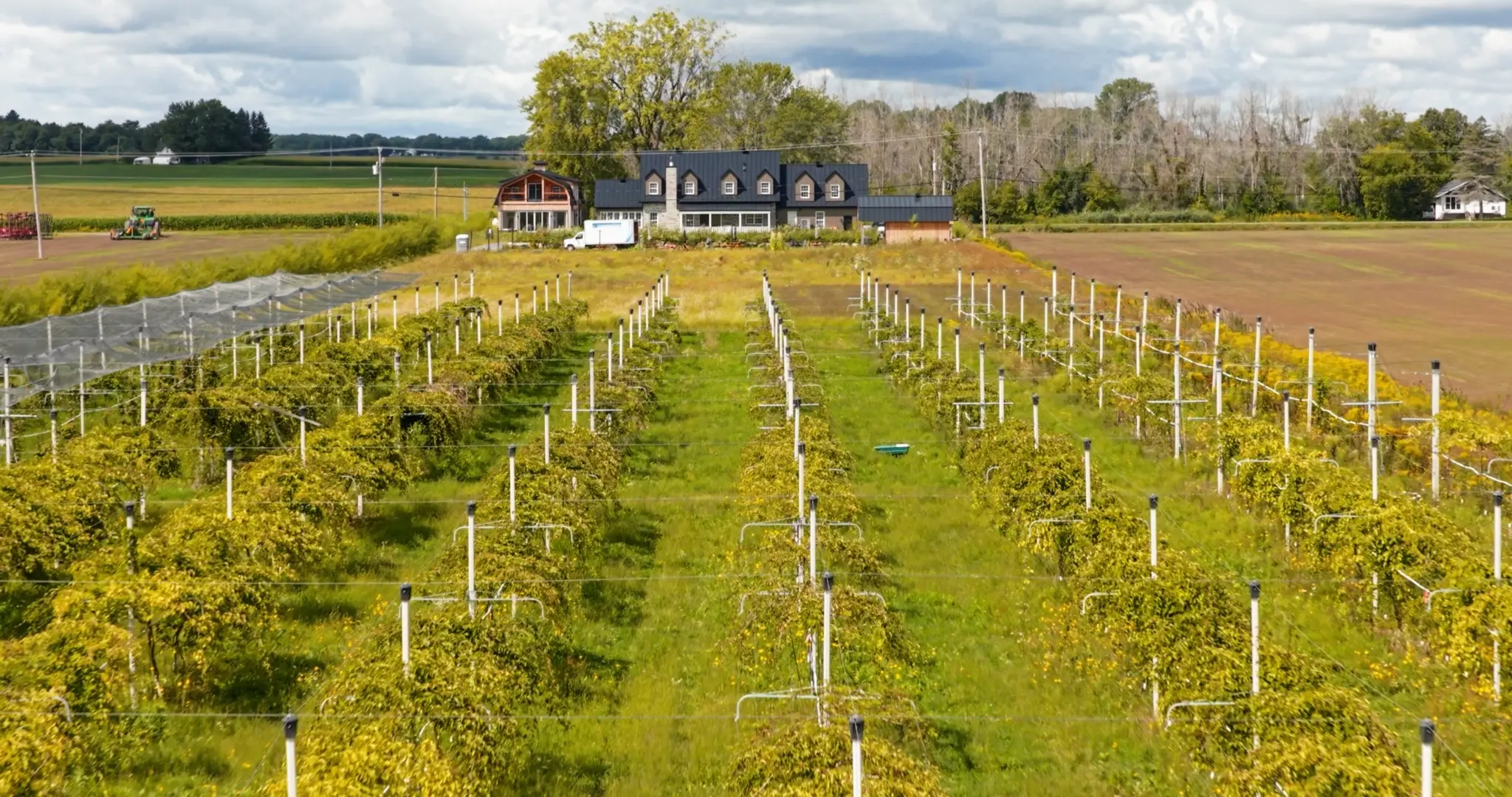
Yes, really! We all know kiwi, that sweet and tangy fruit, but did you know it's possible to grow it in Quebec? At la Ferme du Mihouli in Lacolle, Nadine Gelly and Claude Gagnon took on the challenge of developing arctic kiwi (or northern kiwi) farming, still largely unknown here.
Since we love talking innovation and good food with entrepreneurs who never cease to amaze us, we headed to Nadine's farm for an exclusive interview. Without further ado, here's what we discovered about the nordic kiwi and the many ways to enjoy it.
Tell us, Nadine: does the kiwi grown here look like the one we know?
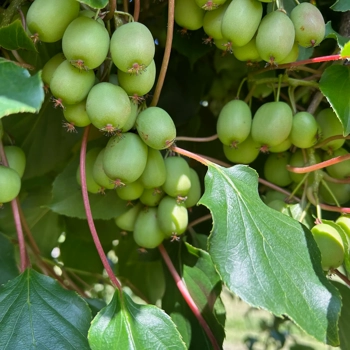
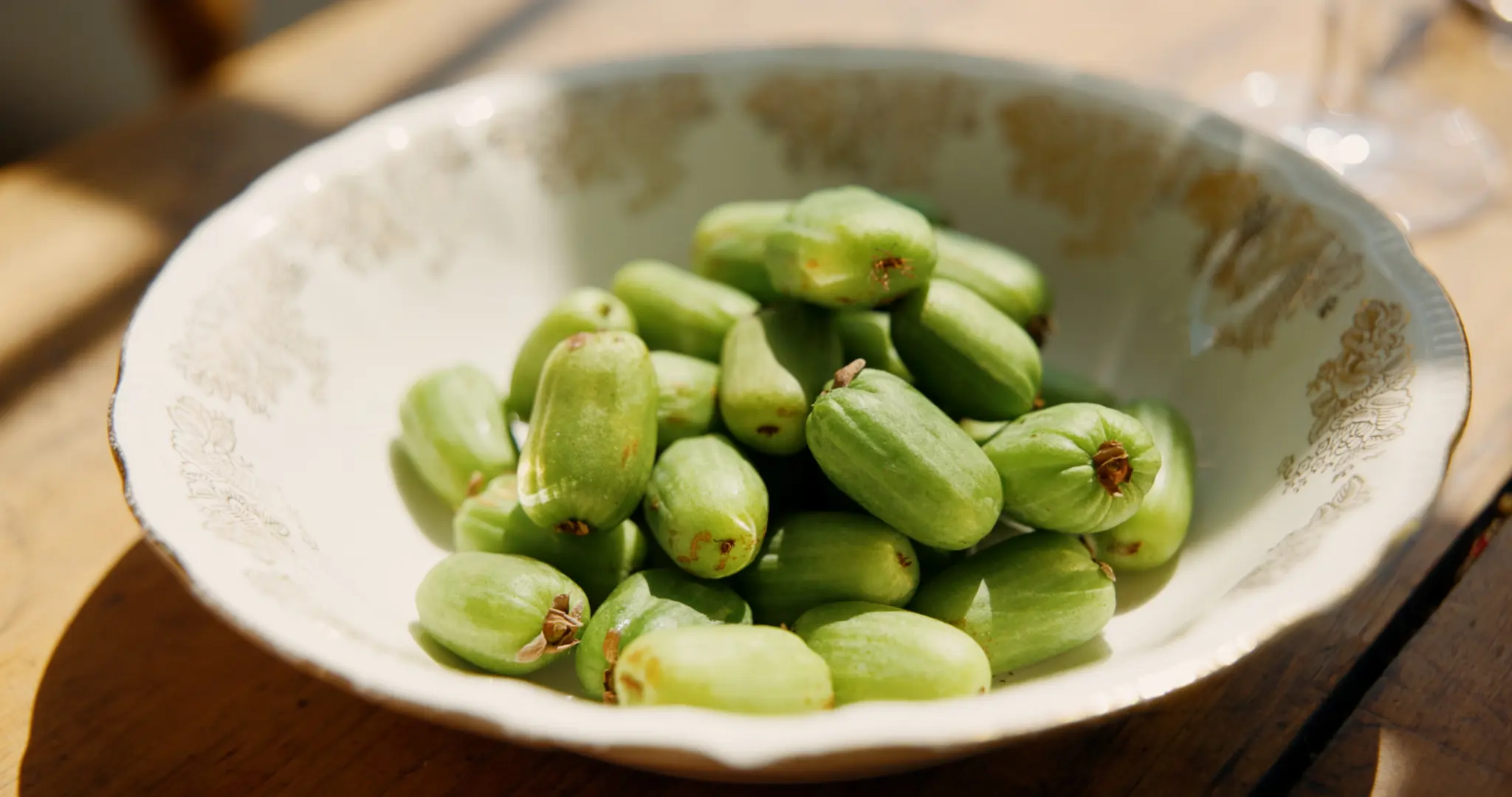
The kiwi we produce at la Ferme du Mihouli is an arctic kiwi. It's quite different from the fuzzy kiwi we're used to seeing: the fruits are much smaller, but the taste is close to that of the golden kiwi. What's interesting is that kiwi is like the apple: there are many varieties. Some taste like pineapple, others like mango, some are sweeter, and others are a bit more tart. Each cultivar, each variety, has its own distinct flavour!
What gave you the idea to start growing such an unusual fruit in Quebec?
Its originality, really. Everyone knows kiwi, but nobody knows you can grow it here. That innovative side was important to me and is what drew me in!
What does it take to grow kiwi in Quebec?
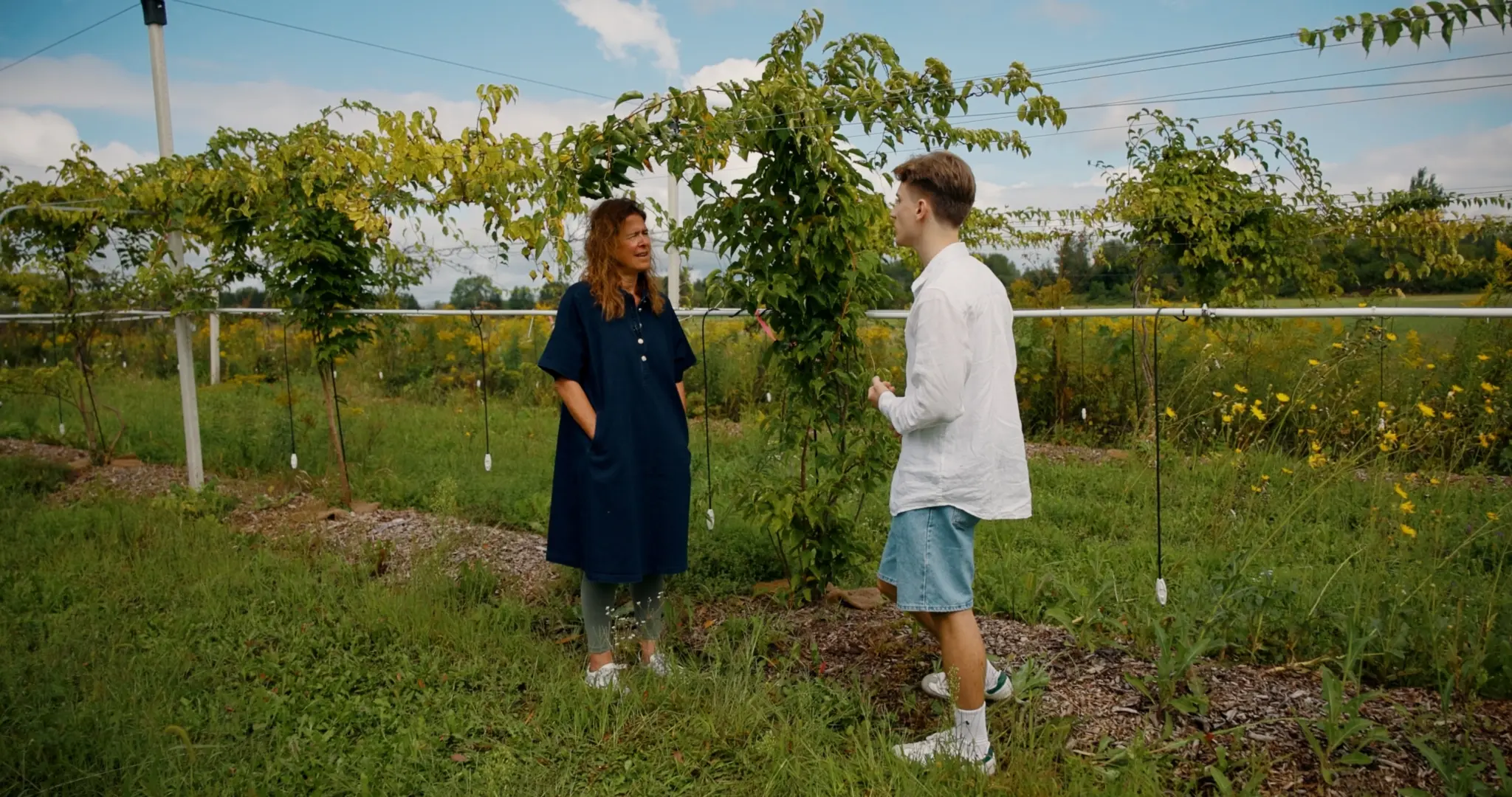
Patience and resilience, because it's new territory. There are very few agronomists in Quebec who know this fruit, so it involves a lot of trial and error. You have to accept that there will be failures, but that failure will also lead you somewhere new. And that's often what happened for us! It's through failures that you grow stronger and are able to go further. That's what makes kiwi growing truly exciting. And the land here in Lacolle brought that dimension too: the challenge of a project that combines agriculture and agritourism.
Can you tell us about the main challenges of growing kiwi in Quebec?
Kiwi farming is very similar to viticulture. When grapevines face challenges, kiwis face the same ones. Late spring frosts are a prime example. Irrigation is also a big factor, because you need to water enormously. We're lucky here because we have the Richelieu River, but we irrigate constantly!
It's also important to know that one male plant is needed for every six female plants, and there are two types of cultivars. Some take two to three years before producing, while others take five to seven years. So you need patience, and you need to be financially resilient.
The good news is that the kiwi plant is a perennial and can live up to a hundred years. Once in production, a still-young plant can yield up to forty-five kilos of kiwis per year.
Where does the name Mihouli come from?
It comes from a Chinese word meaning "monkey pear" referring to the kiwi. Because monkeys used to eat them in the forests of China!
Let's talk about the on-site experience: what can visitors discover at la Ferme du Mihouli?
They can discover how the fruit is grown. We also have a refreshment stand set up as a country-style table, and a space in the field where people can enjoy pizzas, soft kiwi ice cream, and homemade salsas. And one special feature: we serve wines, beers, and ciders exclusively from the Montérégie region.
Can kiwi be enjoyed in ways other than fresh?
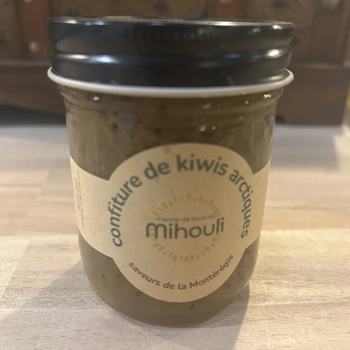
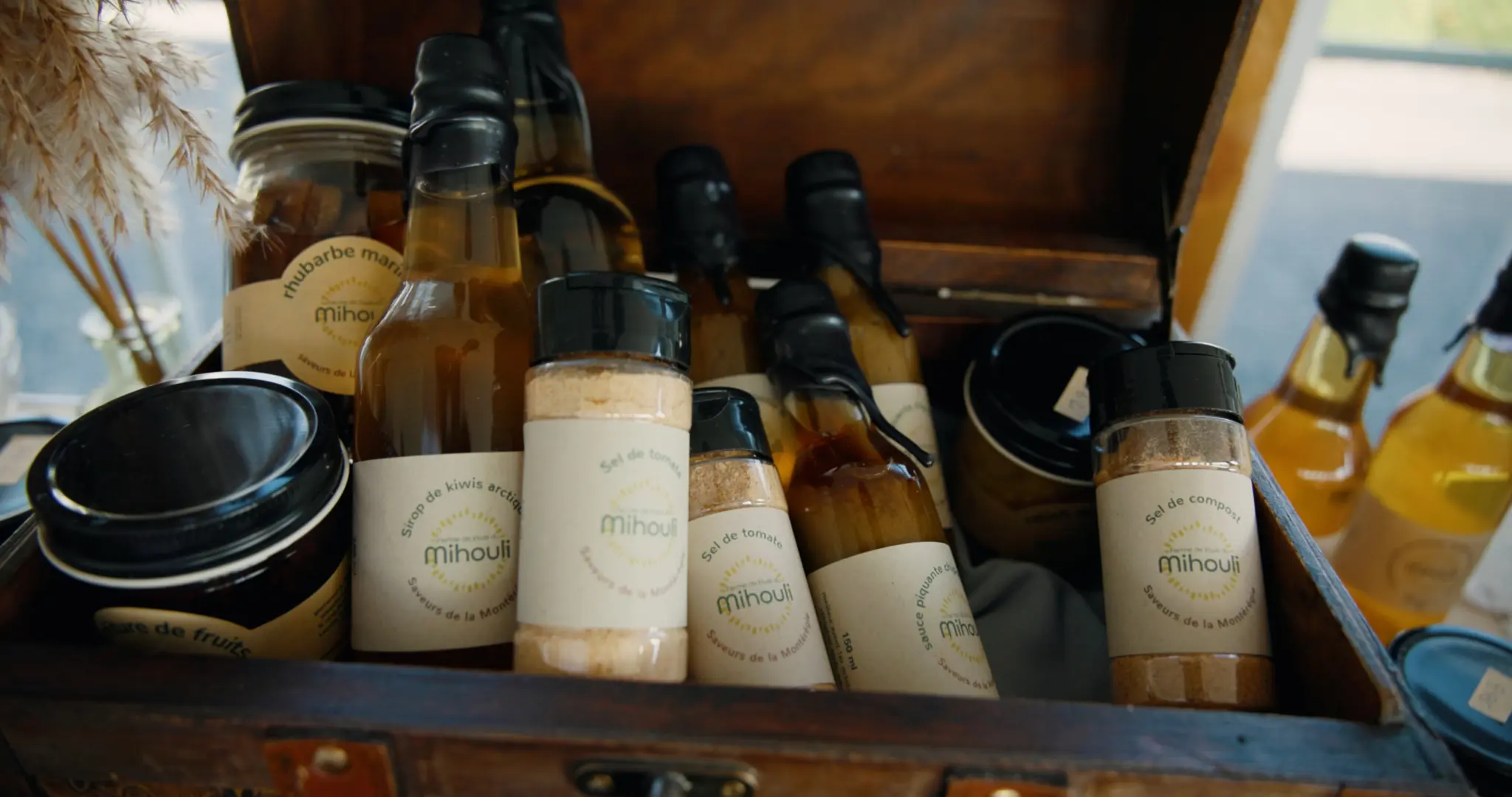
There are so many ways! To name just a few: the crowd favourite is definitely our kiwi jam. We also have our kiwi hot sauce, which is really delicious. The kiwi barbecue sauce, the mustards... We truly have a wonderful variety!
Last but not least: what does it mean to you to be able to display the "Aliments du Québec" logo on your products?
Our concept is 100% local, and our products are verified by Aliments du Québec. It's more than a concept, actually: it's our philosophy. It always has been! Promoting local producers, being able to say that everything in our products comes from Quebec, is a real source of pride.
Discover